
Projects
Each project in our lab seeks to explore and understand variation in the immune system
from the genome up.

What we do...
We are intrigued, challenged, and motivated by the complexity of the immune system, particularly as this pertains to understanding the variation that is observed between individuals, populations, and species. Central to almost all of our work are the complicated genomic regions that encode immune receptors (immunoglobulins and T cell receptors), which are critical to adaptive immunity. The complexity of these gene regions has historically made them difficult to study at the genomic level, and as a result, we still have much to learn about their role in disease and in various clinical contexts.
Our lab develops and leverages novel tools to: (1) better characterize variation in these loci in both human populations and species of biomedical relevance: and (2) delineate the impact of immune receptor diversity in B cell and T cell mediated immunity.

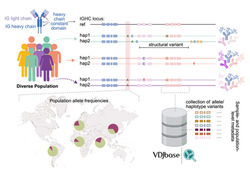
A genomic reference resource for the human heavy and light chain immunoglobulin loci
NIAID
R24AI138963

Antibody gene signatures in rheumatic heart disease: uncovering pathways toward improved patient outcomes
AHA
24TPA1301777

Population genotyping of the germline immunoglobulin repertoire in AIDS-designated rhesus macaque breeding colonies
NIAID
2R24AI162317

Delineate the Mechanisms Underlying Primary Resistance or Response to Tumor-infiltrating Lymphocyte Therapy in Cancer Patients
NIH/NIGMS
3P20GM135004-05S1

Investigating the drivers of interspecific variation in antibody immunity using comparative genomic and phylogenetic approaches
NSF
2536096

iAKC: Integrated AIRR Knowledge Commons
NIAID
U24AI170505
 |  |  |  |  |  |  |
|---|